Use the buttons, dots, or your left/right arrow keys.
1/7 — Should We Mediate?
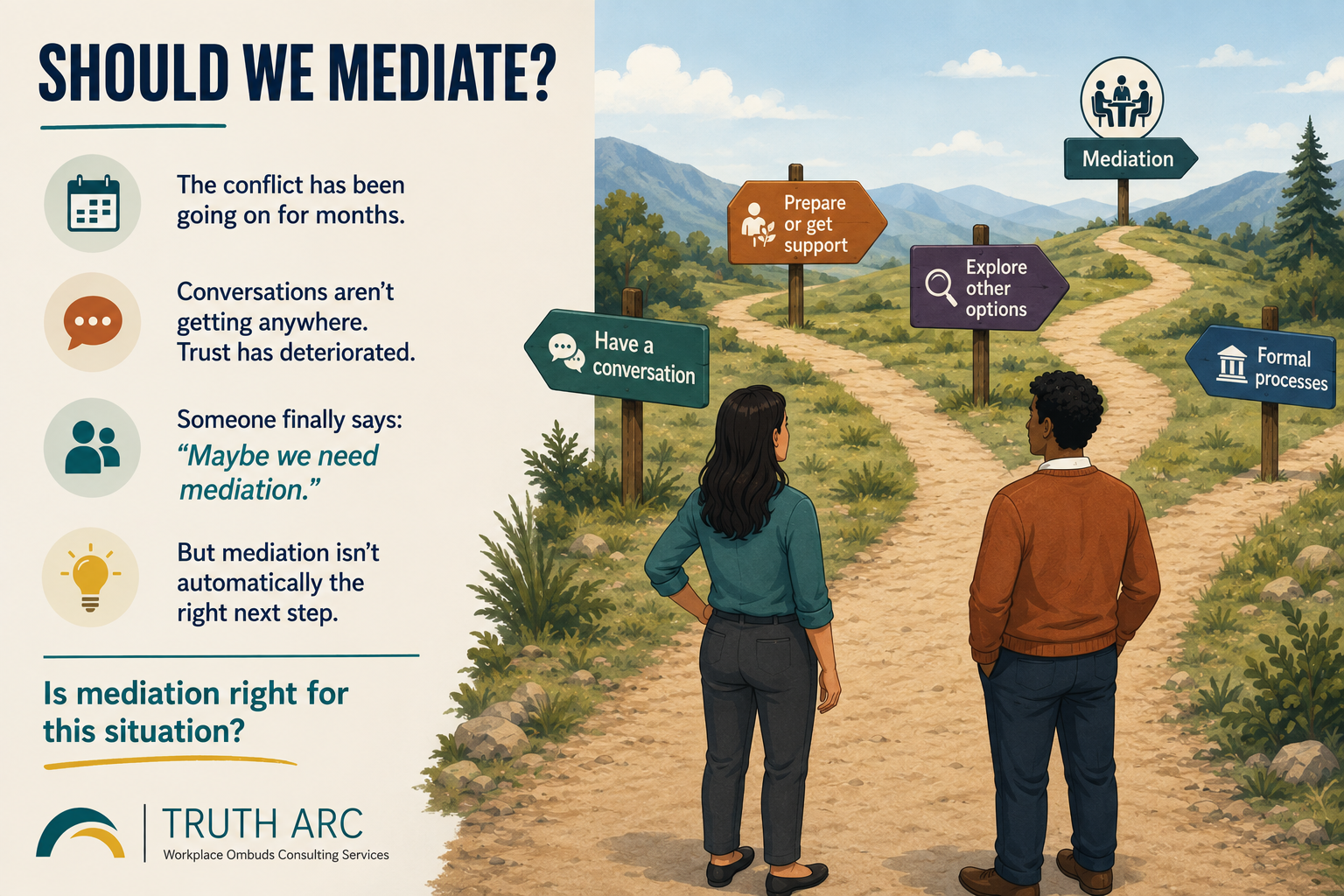
The conflict has been going on for months. Conversations aren’t getting anywhere. Trust has deteriorated.
Someone finally says, “Maybe we need mediation.”
But mediation isn’t automatically the right next step.
Is mediation right for this situation?
Possible paths may include having a conversation, preparing or getting support, exploring other options, mediation, or a formal process.
2/7 — What Does Mediation Actually Do?
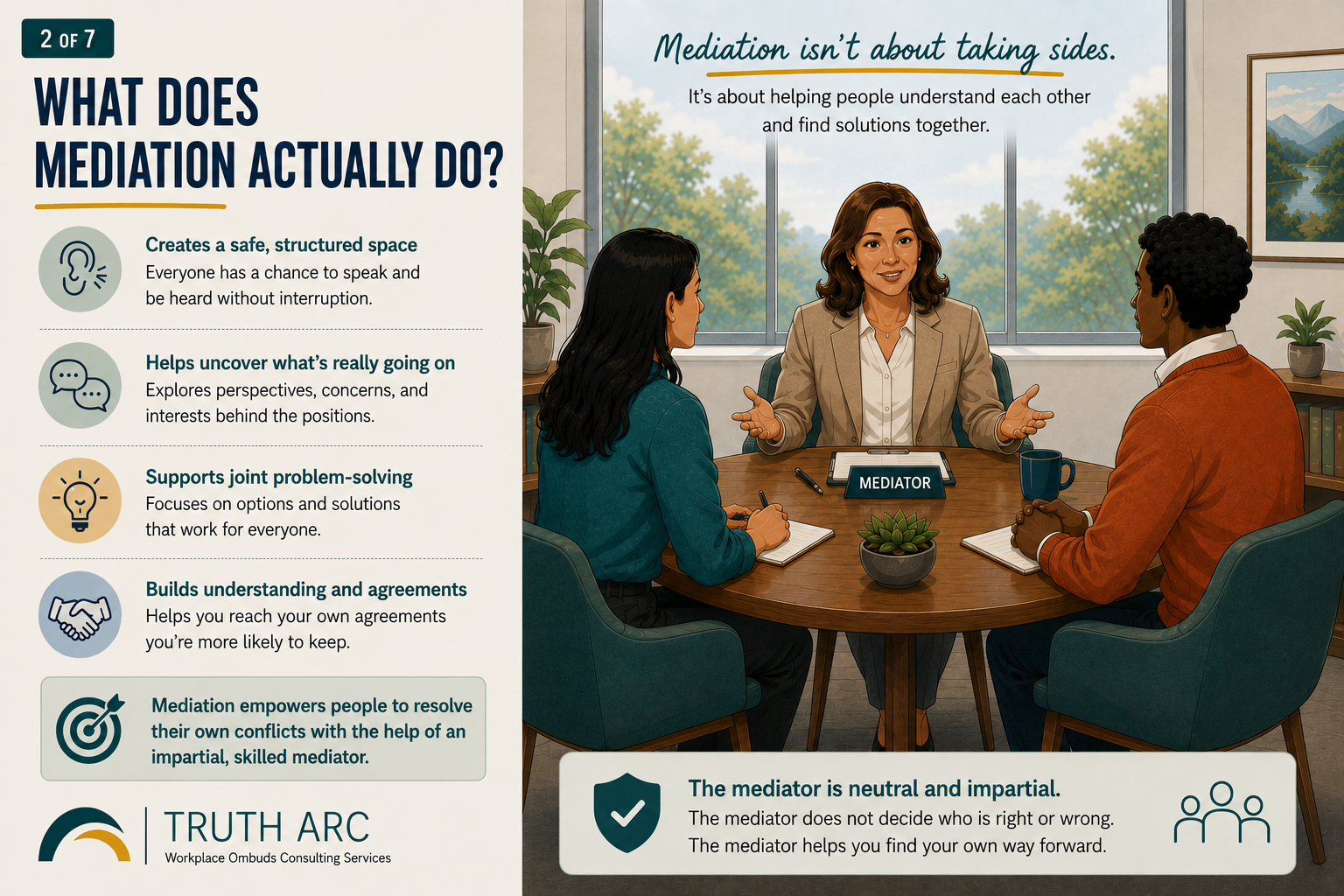
Mediation isn’t about taking sides. It’s about helping people understand each other and find solutions together.
Mediation can:
- Create a safe, structured space where everyone has a chance to speak and be heard without interruption.
- Help uncover what’s really going on by exploring perspectives, concerns, and interests behind positions.
- Support joint problem-solving by focusing on options and solutions that work for everyone.
- Build understanding and agreements that participants develop themselves and may therefore be more likely to keep.
Mediation empowers people to resolve their own conflicts with the help of an impartial, skilled mediator.
The mediator is neutral and impartial. They do not decide who is right or wrong; they help participants find their own way forward.
3/7 — When Can Mediation Work Well?
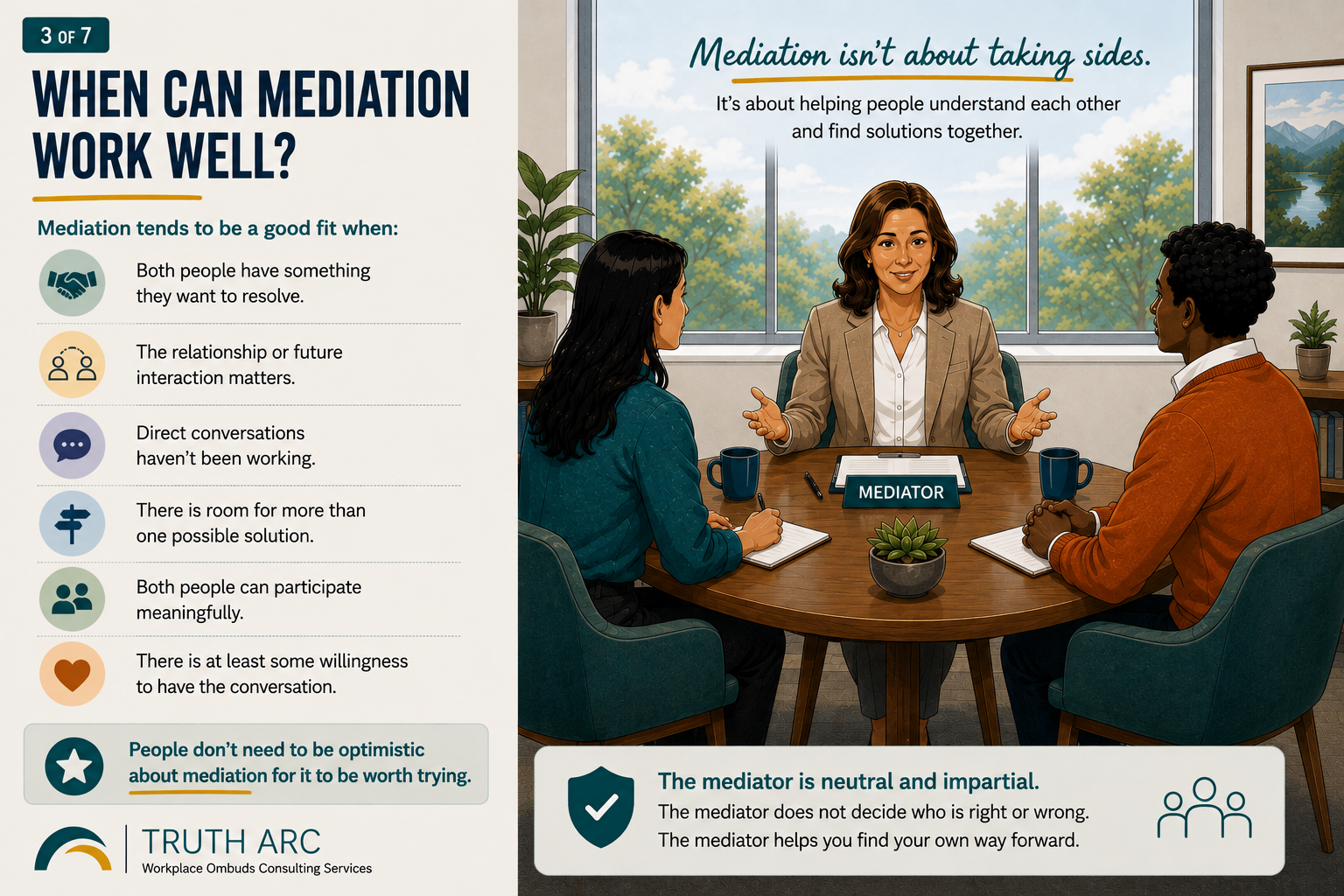
Mediation tends to be a good fit when:
- Both people have something they want to resolve.
- The relationship or future interaction matters.
- Direct conversations haven’t been working.
- There is room for more than one possible solution.
- Both people can participate meaningfully.
- There is at least some willingness to have the conversation.
People don’t need to be optimistic about mediation for it to be worth trying.
4/7 — When Might Mediation Not Be the Right Call?
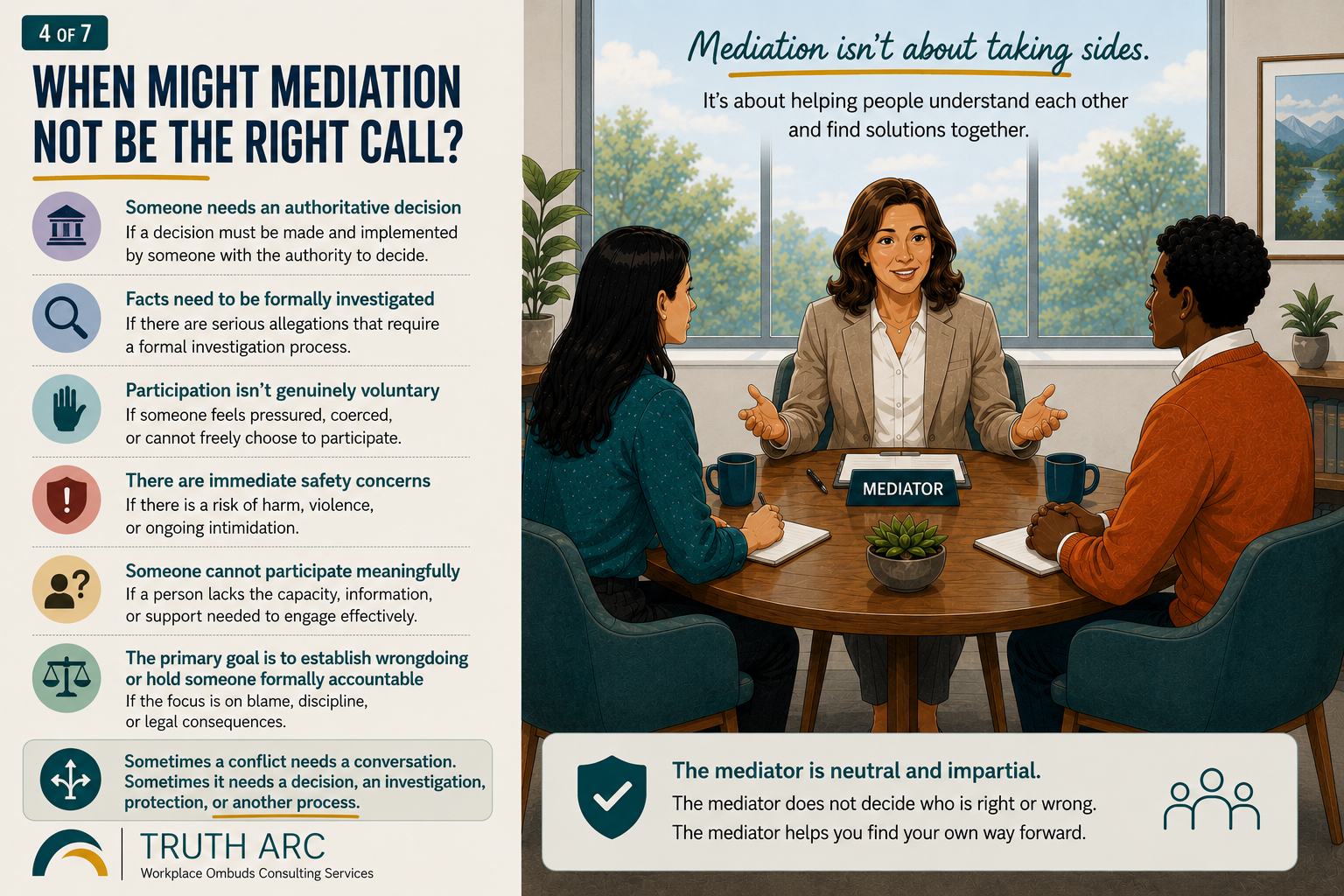
Mediation may not be the right process when:
- Someone needs an authoritative decision.
- Facts need to be formally investigated.
- Participation isn’t genuinely voluntary.
- There are immediate safety concerns, including risk of harm, violence, or ongoing intimidation.
- Someone cannot participate meaningfully because they lack the capacity, information, or support needed.
- The primary goal is to establish wrongdoing or hold someone formally accountable.
Sometimes a conflict needs a conversation. Sometimes it needs a decision, an investigation, protection, or another process.
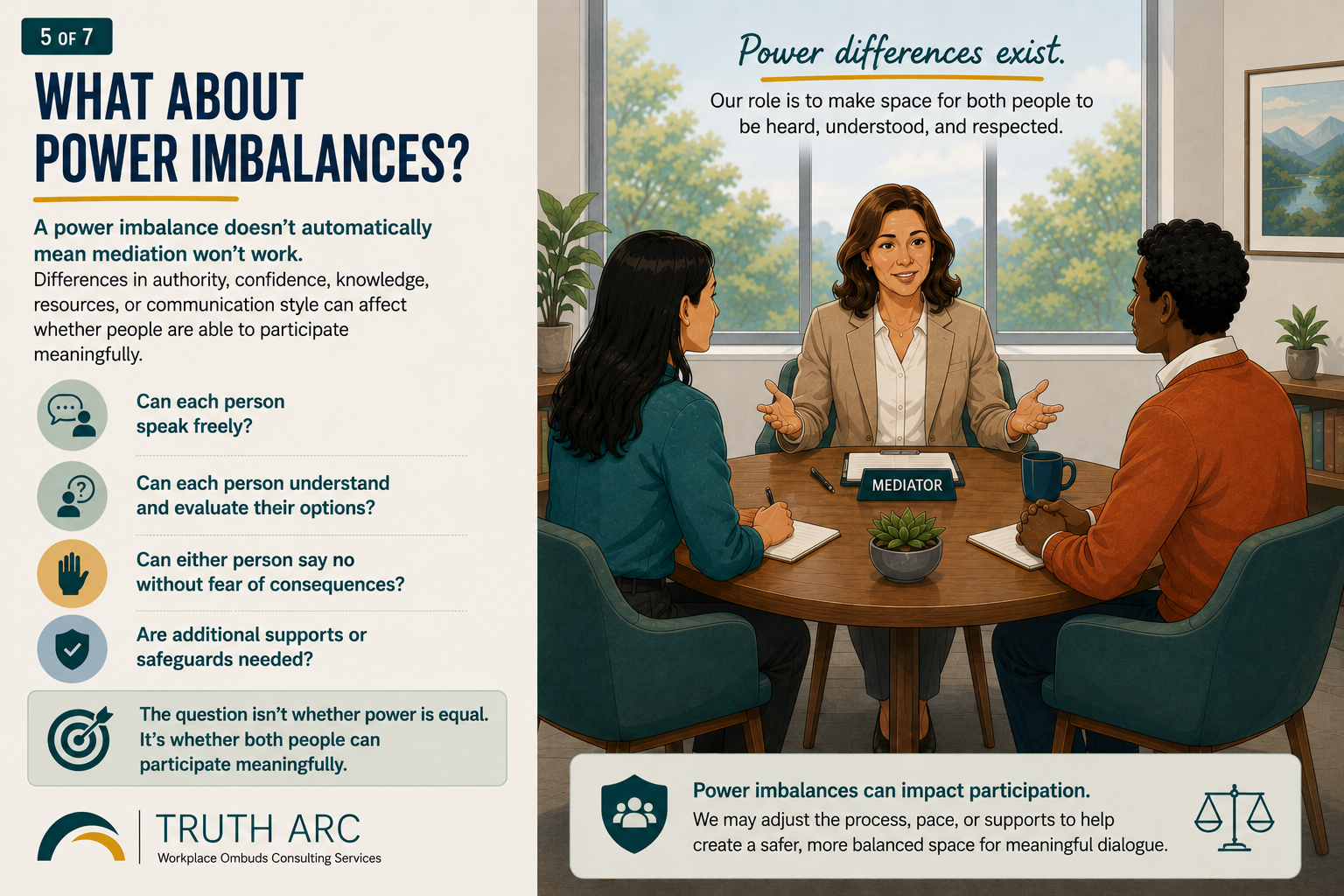
5/7 — What About Power Imbalances?
A power imbalance doesn’t automatically mean mediation won’t work.
Differences in authority, confidence, knowledge, resources, or communication style can affect whether people are able to participate meaningfully.
Consider:
- Can each person speak freely?
- Can each person understand and evaluate their options?
- Can either person say no without fear of consequences?
- Are additional supports or safeguards needed?
The question isn’t whether power is equal. It’s whether both people can participate meaningfully.
Power imbalances can affect participation. The process, pace, or supports may sometimes be adjusted to help create a safer, more balanced space for meaningful dialogue.
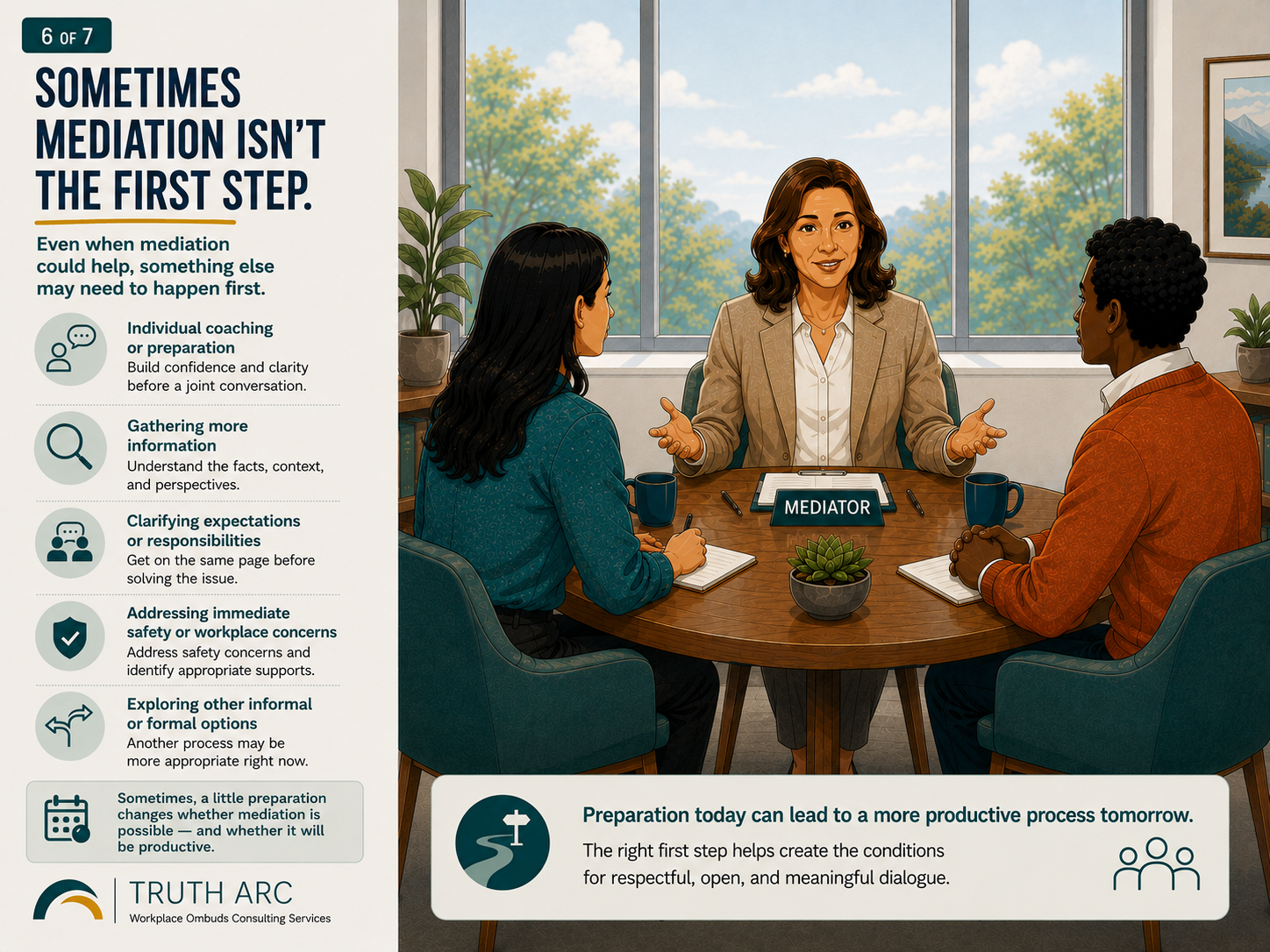
6/7 — Sometimes Mediation Isn’t the First Step
Even when mediation could help, something else may need to happen first.
That might include:
- Individual coaching or preparation — building confidence and clarity before a joint conversation.
- Gathering more information — understanding the facts, context, and perspectives.
- Clarifying expectations or responsibilities — getting on the same page before solving the issue.
- Addressing immediate safety or workplace concerns — addressing safety concerns and identifying appropriate supports.
- Exploring other informal or formal options — another process may be more appropriate right now.
Sometimes, a little preparation changes whether mediation is possible — and whether it will be productive.
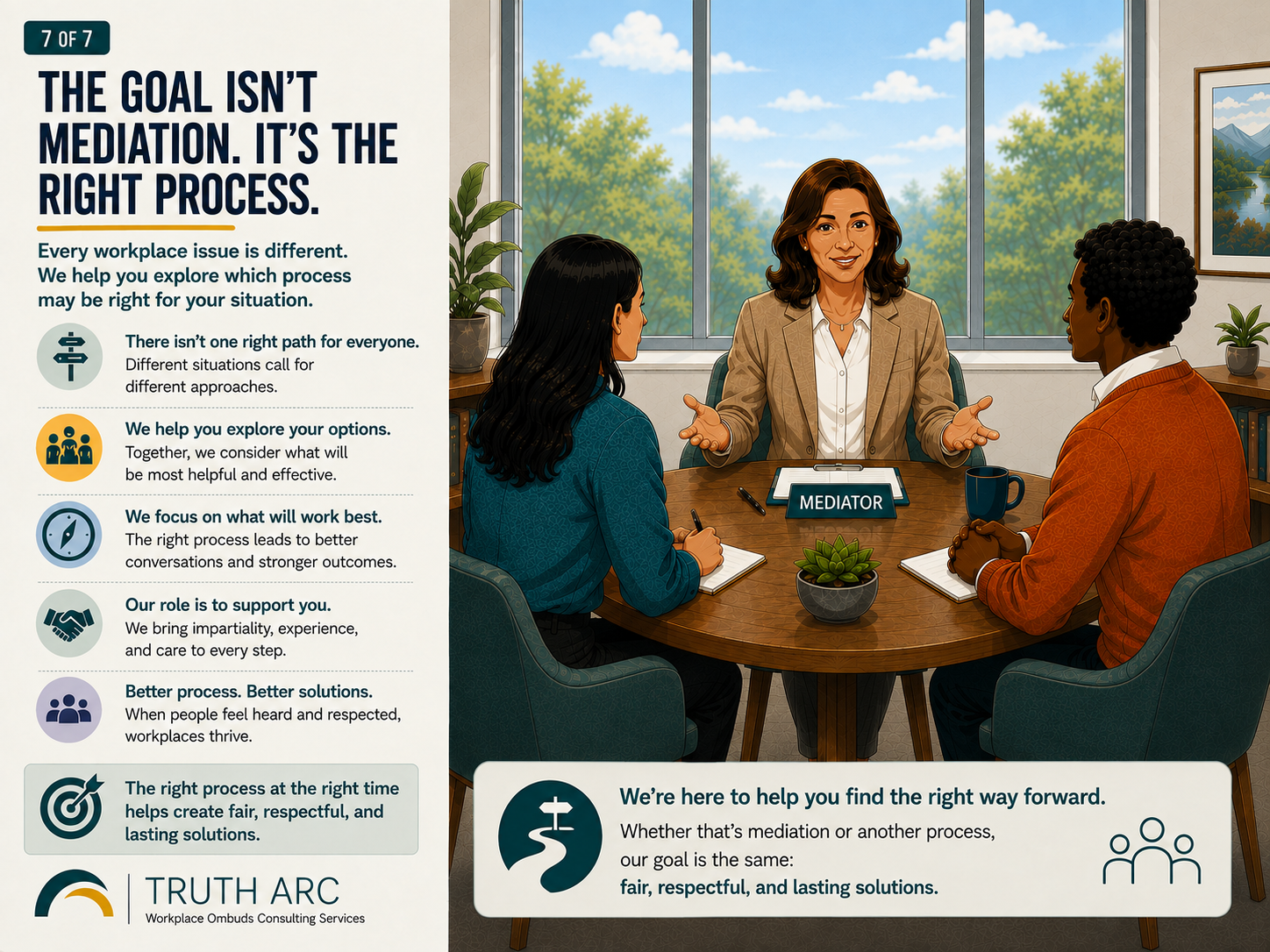
7/7 — The Goal Isn’t Mediation. It’s the Right Process.
Every workplace issue is different. We help you explore which process may be right for your situation.
There isn’t one right path for everyone. Different situations call for different approaches.
We help you explore your options and consider what may be most helpful and effective.
We focus on what will work best. The right process can lead to better conversations and stronger outcomes.
Our role is to support you with impartiality, experience, and care.
The right process at the right time helps create fair, respectful, and lasting solutions.
Whether that’s mediation or another process, the goal is the same: finding the right way forward.